Vorhang auf, Bühne frei für den BBC-Workshop „Laugh’n‘Learn“
Wer hätte gedacht, dass sich unsere Schulaula innerhalb weniger Stunden in ein voll funktionstüchtiges TV-Studio verwandeln würde?
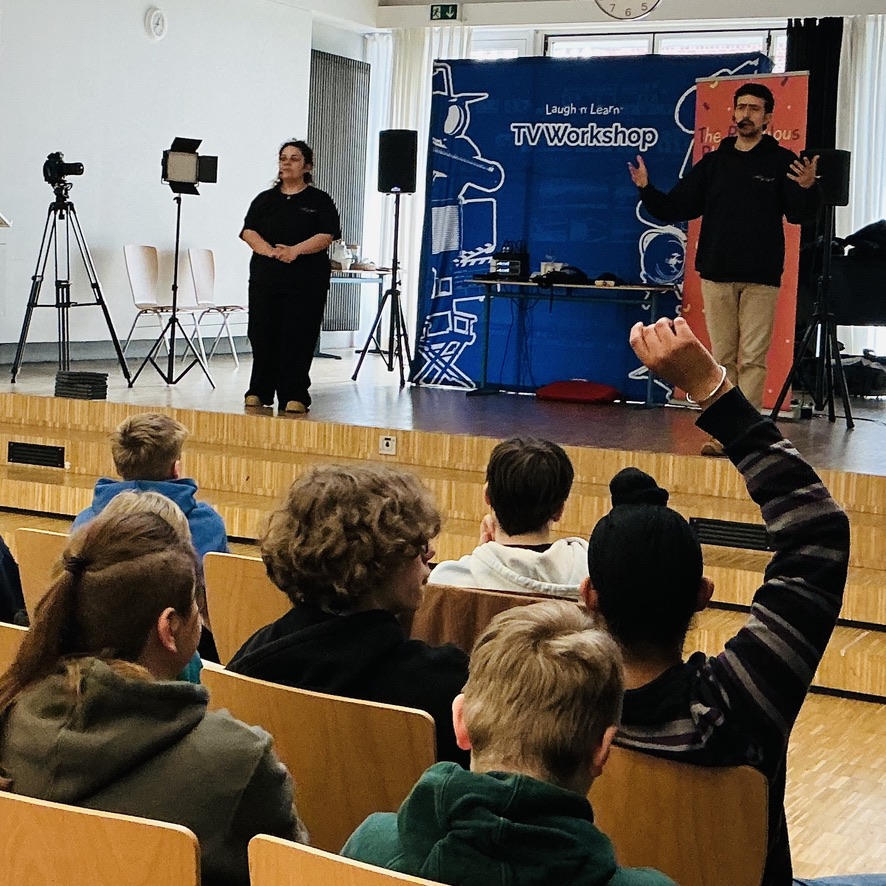
Am Donnerstag, den 02.04.2026 wehte ein Hauch von internationaler Medienluft durch das Hansa-Gymnasium. Die BBC-Experten berichteten in ihrer Muttersprache Englisch über ihre Arbeit vor der Kamera und gaben einen lebhaften Einblick in den Entstehungsprozess von TV-Produktionen. Dabei wurde schnell klar: Um eine Film- oder Serienepisode auf die Bildschirme zu bringen, braucht es weit mehr als nur die Schauspieler vor der Kamera.
Anstatt grauer Theorie hieß es für die Hansa-Schüler der 7. und 8. Klassen: Ausprobieren, Mitmachen und Anpacken. Die Aula war kaum wiederzuerkennen – überall blinkten Lichter, hingen Mikrofone und standen mobile Kamera-Setups in Form von iPads bereit.
Fazit: Es wurde gelacht, improvisiert und am Ende entstanden kleine, selbst produzierte Clips. Es zeigte sich, dass in jedem von uns ein Medienprofi schlummert. Ein riesiges Dankeschön an das Team von „Laugh’n‘Learn“ für diesen inspirierenden Tag.
BBC Workshop -The Ridiculous Rhyme Show
The assembly was led by two knowledgeable presenters from the BBC, a humorous man from the vibrant city of Manchester, and a kind woman from the historic city of London, who typically create entertaining programs for younger audiences.
They began by explaining the essential and practical elements required to make a film, focusing on important aspects of media production such as lighting, directing and scriptwriting.
Their introduction was clear, well-structured and highly informative, giving us a realistic sense of how much time, detail and careful coordination is invested into even a short piece of film.
After this, they selected five students to take part in a short, hands-on demonstration. The students were given a structured script to learn, along with some simple costumes, and began rehearsing their roles.
After practicing several times, they made sure to understand both lines and movements before heading on stage.
Other students were given important responsibilities as well, including directing, managing the technical sound equipment and assisting with stage lighting which made the whole experience feel more realistic and professional.
The scene performed was based on a dramatic crime scenario, involving a serious police officer, a concerned banking manager and a group of evil robbers.
After performing the scene once, they received constructive and helpful feedback and were encouraged and excited to improve the play the second time. The group adapted it into something more dramatic and creative, adding musical elements, and making the action more energetic, louder, expressive and lively.
Once the performances had finished, they took a moment to take a polite bow and, and then the crowd had the opportunity to ask the presenters some experiential and thoughtful questions. They spoke and let the audience guess how long it can take to film and edit a production, which helped put into perspective how much behind-the-scenes work is involved.
To conclude, they both showed the crowd an example of a kind, simple and yet effective content they present to younger children.
It was a light-hearted but interesting way to end this informative session.
Text (deutsch): Kjell (7b) und Text (englisch): Vienna (7b)